






How to Choose Industrial Casters and Caster Wheels
Casters are easy to overlook until one fails. A wheel flat spots, a swivel starts to shimmy, or a loaded cart suddenly takes two people to push. In a warehouse or plant, that small part affects safety, floor wear, and how fast your team can move material.
The good news is that picking the right industrial caster comes down to a handful of questions. This guide walks through them in the order we use when we size casters for customers across Kansas.
1. Start With Load Capacity
Every caster carries a load rating, and undersizing is the most common reason casters fail early. To find what each caster needs to handle:
- Add the weight of the cart or equipment to the heaviest load it will ever carry.
- Divide by the number of casters minus one.
Why minus one? Warehouse floors are rarely perfectly flat. On a dip, a floor joint, or a dock plate, one caster can lift off the ground and the other three carry everything. Sizing this way builds in that margin. If carts get bumped by forklifts, dropped onto, or towed in tugger trains, size up again.
As a rough guide, casters fall into three classes:
- Light duty, under 500 lbs per caster, for utility and tool carts
- Medium duty, 500 to 2,000 lbs, for warehouse carts, parts racks, and mobile workstations
- Heavy duty, over 2,000 lbs, for die carts, machinery, and transfer carts
2. Look at Your Floor
The floor tells you as much about the right wheel as the load does. Ask:
- Is it smooth, sealed concrete, or rough and cracked?
- Are there expansion joints, dock plates, ramps, or thresholds to cross?
- Is there debris like metal chips, stretch wrap, or zip ties?
- Does the floor need to be protected, such as epoxy coated or polished surfaces?
Hard wheels roll easily on smooth floors but transmit every bump and can chip on rough surfaces. Softer treads absorb shock and protect the floor but take a little more effort under heavy loads. Larger wheels roll over cracks and debris more easily than small ones.
3. Choose the Wheel Material
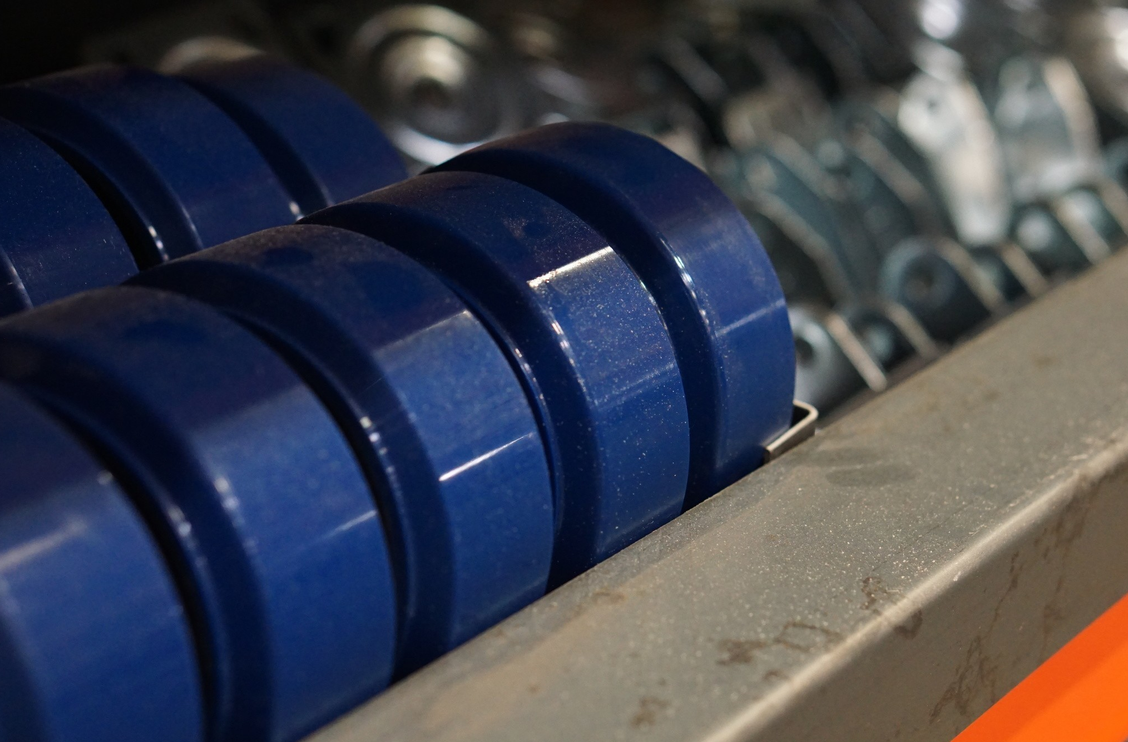
This is where most of the decision happens. Here is a quick comparison of common industrial caster wheel materials.
| Wheel | Strengths | Watch out for |
|---|---|---|
| Polyurethane | High capacity, quiet, floor friendly, resists cuts and chunking | Very high heat |
| Phenolic | Easy rolling under heavy loads, resists oil and grease, high temp versions available | Can chip on rough floors or debris |
| Cast iron / forged steel | Highest capacity, handles impact and heat | Loud and hard on floors |
| Rubber / solid elastomer | Quiet, cushioned, floor protecting | Lower capacity, more push effort under load |
Polyurethane vs phenolic casters is the question we hear most. For general warehouse use on concrete, polyurethane is usually the better all around choice because it balances capacity, noise, and floor protection. Phenolic makes sense for heavy loads on smooth floors, oily areas, or heat, where easy rolling matters more than cushioning.
4. Pick Swivel, Rigid, or Both
Swivel casters rotate 360 degrees. Rigid casters roll only forward and backward. How you combine them changes how a cart handles:
- Two swivel, two rigid: the most common setup. Steers from the swivel end and tracks straight over long distances.
- Four swivel: maximum maneuverability in tight spaces, but harder to keep straight on long pushes.
- Diamond pattern: two rigid casters in the middle with swivels at each end, so long carts pivot in place.
For heavy carts that see shock loads, consider kingpinless swivel casters. They do not rely on a single kingpin that can loosen or break, so they hold up much longer in hard use.
5. Match the Mount and Height
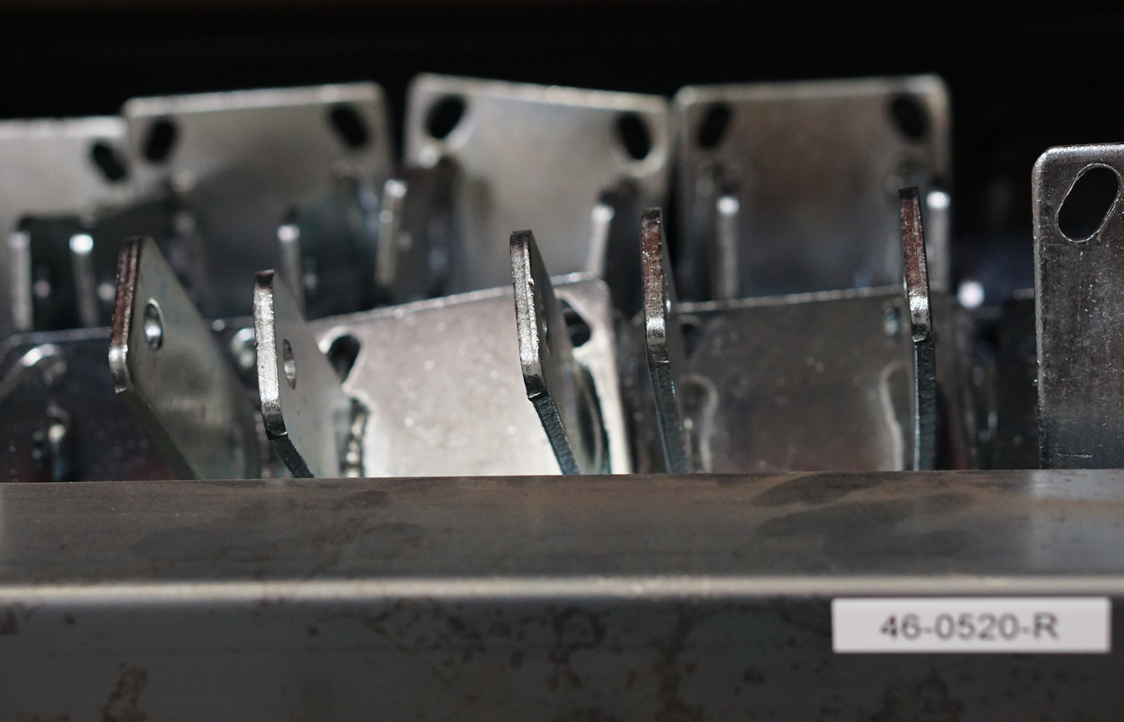
The mount has to fit your equipment. Top plate casters bolt to a flat frame and handle the heaviest loads. Threaded stem and grip ring stem casters fit equipment legs, shelving posts, and tubular frames. When replacing, measure the plate size and bolt hole pattern, or the stem diameter and length, and check the overall height so your cart deck stays level.
6. Account for the Environment
Standard casters are built for normal indoor temperatures and dry floors. If your casters see any of these, say so when you order:
- Heat from ovens, dryers, or paint lines calls for high temperature wheels and bearings.
- Washdown or wet areas call for stainless steel casters and sealed bearings.
- Chemicals, oils, or solvents narrow down which wheel materials will hold up.
- Cold storage and freezers affect some tread materials, so confirm the rating.
7. Do Not Forget Brakes and Ergonomics
Carts that are loaded, worked on, or parked on a slope need to stay put. Wheel brakes stop the wheel from rolling. Total lock brakes stop both the wheel and the swivel. Swivel locks turn a swivel caster into a rigid one for long, straight runs.
Push force matters too. Heavy carts that are hard to start and steer wear people down over a shift. Larger diameter wheels, quality bearings, and ergonomic casters designed to reduce push and pull force make a real difference for the people doing the moving.
When to Replace Your Casters
Do not wait for a caster to fail under load. Replace casters when you see:
- Flat spots, cracks, or chunks missing from the tread
- Swivels that wobble, shimmy, or stick
- Grinding, squealing, or rough feeling bearings
- Bent forks, loose mounting bolts, or brakes that no longer hold
- Carts that are noticeably harder to push than they used to be
Replace casters as a full set when you can. Mixing worn and new casters on the same cart puts uneven load on the new ones and makes the cart handle unpredictably.
Get Help Sizing Industrial Casters in Kansas
If you know what you are moving and where, we can do the rest. Berry Material Handling supplies industrial casters and caster wheels from several manufacturers, including heavy duty casters, with local support in Wichita, Topeka, and Salina. Bring in a worn caster, send us the specs, or tell us about the application and we will match it.