





Lithium-Ion Forklift Batteries: Are They Worth It for Your Kansas Warehouse?
If you are running two or three shifts, lithium-ion forklift batteries are almost always worth it. If you run one light shift and the truck sits all night, lead-acid still does the job for less money up front. That is the honest answer, and it is the conversation we have with customers every week at Berry Material Handling. We have been the authorized Hyster and Yale dealer in Kansas since 1975, and both brands now build lithium-ion power directly into the truck instead of dropping a battery in a box. Here is what that actually changes on your floor.
What makes a lithium-ion forklift battery different from lead-acid?
It stores more energy in a smaller, lighter package, and it takes care of itself.
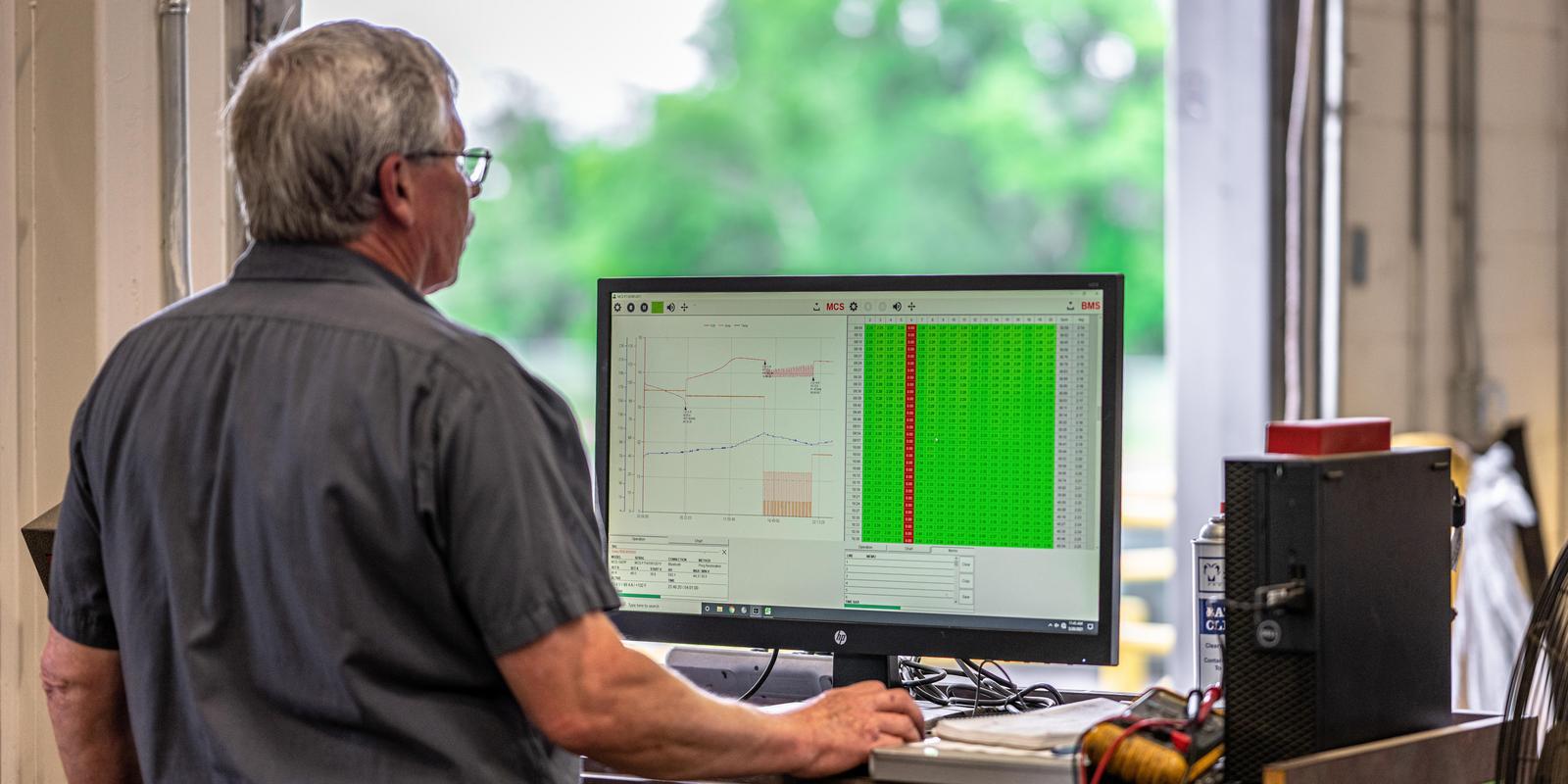
Hyster and Yale both use lithium iron phosphate, or LFP, chemistry. Hyster chose it because it handles heat better than other lithium chemistries, lasts longer, and does not require mining rare metals like cobalt or nickel. Every pack has a Battery Management System that watches cell voltage, temperature, and current in real time, and shuts down charging before anything reaches an unsafe limit.
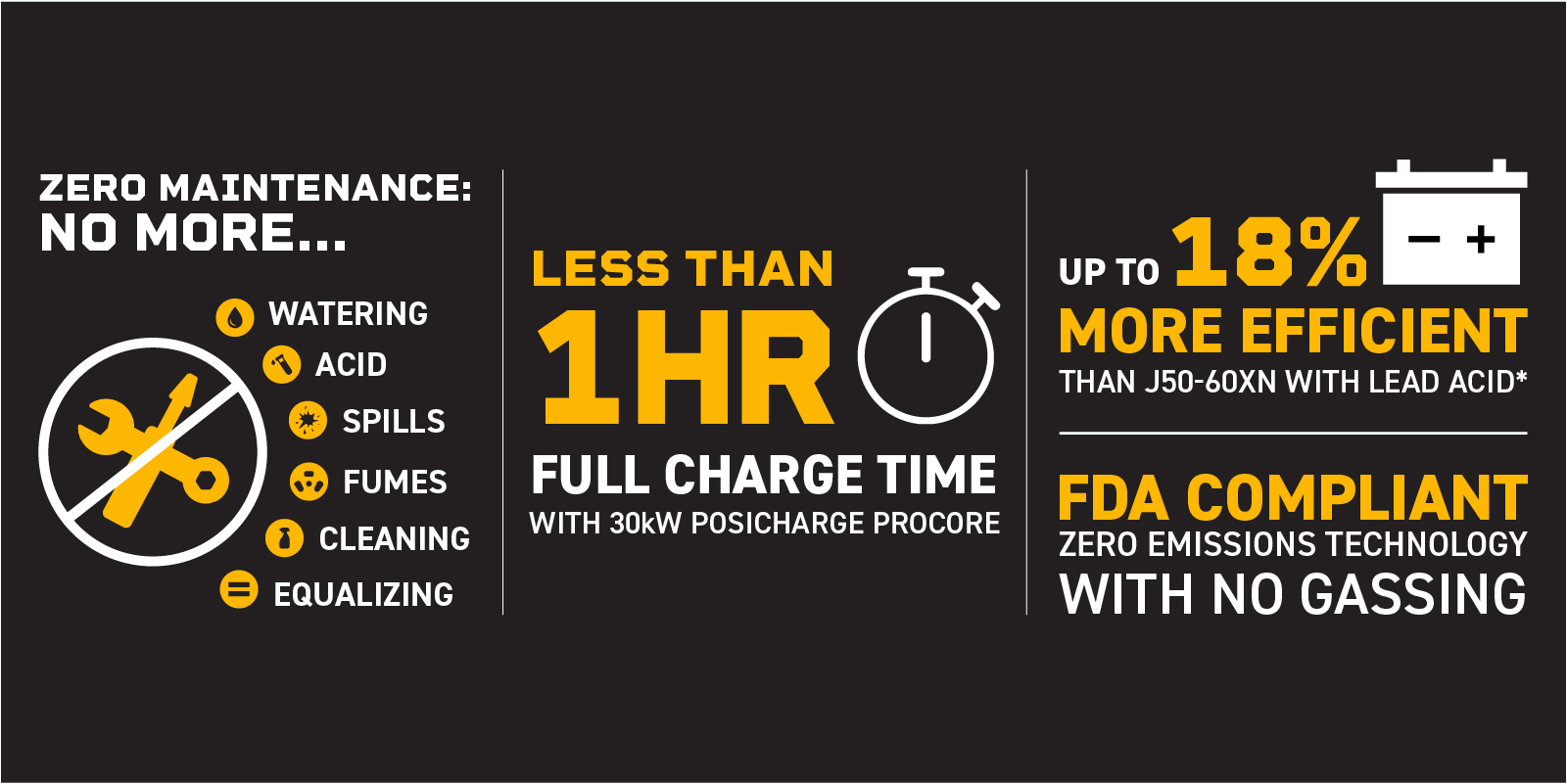
There is no water to add, no acid to clean up, and no equalization charge to schedule.
How much time does lithium-ion actually save on charging?
Enough to eliminate the battery swap completely.
Hyster puts real numbers on it. A lead-acid battery change takes about 20 minutes of operator time, followed by roughly 16 hours of charging and cool-down.
- 8 hours run time
- 8 hours charge time
- 8 hours cooling time
A lithium-ion truck like the Hyster J50-60XNL can fully charge in less than an hour. In opportunity-charging use, Hyster reports one hour of operation from 11 minutes of charging.
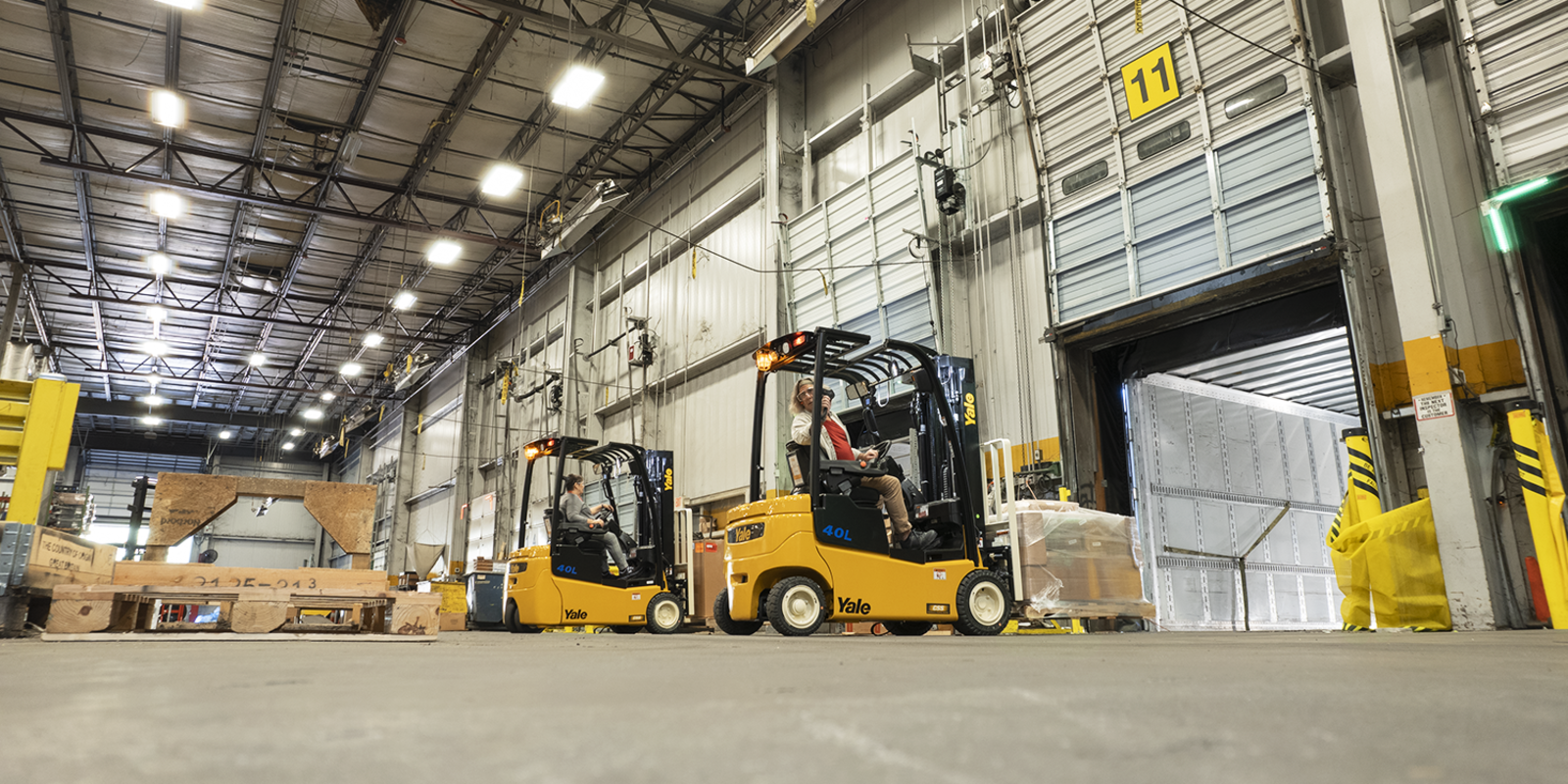
That is the whole point. Your operator plugs in at lunch, plugs in at break, and the truck never leaves the floor. No spare batteries, no battery room, no change-out crew.
The new chargers put the port on the side of the truck, so nobody opens a hood, and an interlock sensor keeps the truck from moving while it is plugged in.
Do lithium-ion forklift batteries really need zero maintenance?
The battery pack itself, yes.
Both manufacturers state it flatly. Yale’s guidance is that there is no maintenance required for the battery pack, you just follow proper operating procedures. Hyster says the same thing about its packs.
What comes off your list is real money: watering carts, watering labor, spill kits, acid neutralizer, cool-down windows, and the floor space the whole operation takes up.
The truck still needs planned maintenance. The battery does not.
How long does a lithium-ion forklift battery last?
Both Hyster and Yale warranty the pack to 75% state of health for 60 months, 3,000 charge cycles, or 10,000 hours, whichever comes first.
That number holds at ambient temperatures up to 95 degrees. Above that, the coverage steps down. From 95 to 113 degrees it is 2,500 cycles or 8,000 hours, and from 113 to 140 degrees it is 2,000 cycles or 6,000 hours. Self-discharge sits under 3.5% a month, so a truck parked over a long weekend is ready when you are.
For perspective, Hyster notes that a moderately used internal combustion truck has an economic life for its first owner of about 10,000 to 12,000 hours, and a well maintained lithium-ion truck could pass that.
Will lithium-ion hold up in a freezer and in a Kansas August?
Yes, on both ends of the thermometer.
Hyster rates its lithium-ion big trucks for ambient temperatures from -18 degrees C to 43 degrees C, which is roughly 0 to 110 degrees Fahrenheit, depending on duty cycle. The pack heats itself in cold conditions during operation and charging, and forced air cooling is available for hot work.
That flexibility matters here. A cold storage operation in Garden City or a dock in Wichita in July can run the same truck in both zones instead of dedicating a machine to each one.
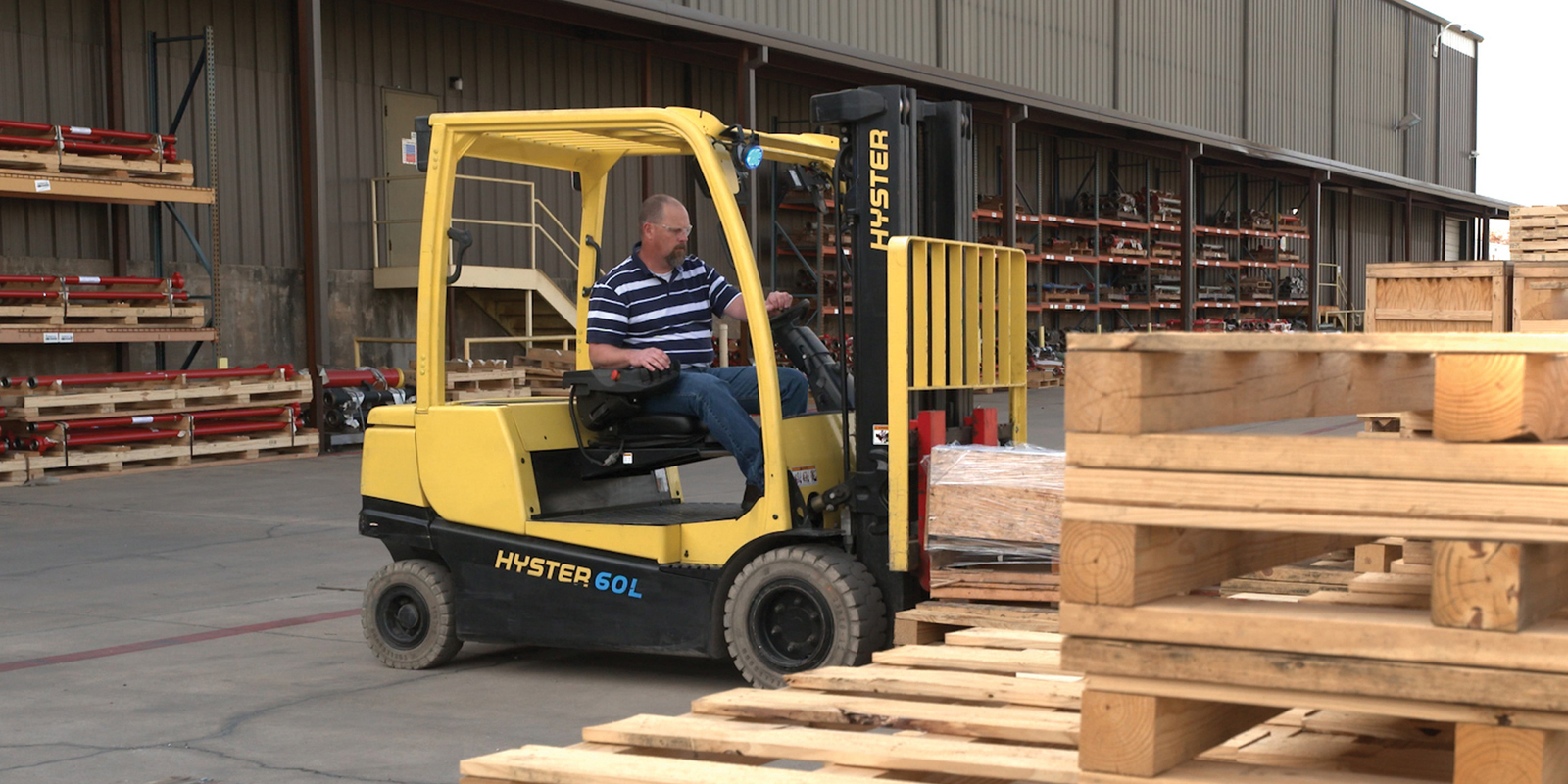
Can you put a lithium-ion battery in a forklift you already own?
Sometimes, and there are two very different paths worth knowing about.
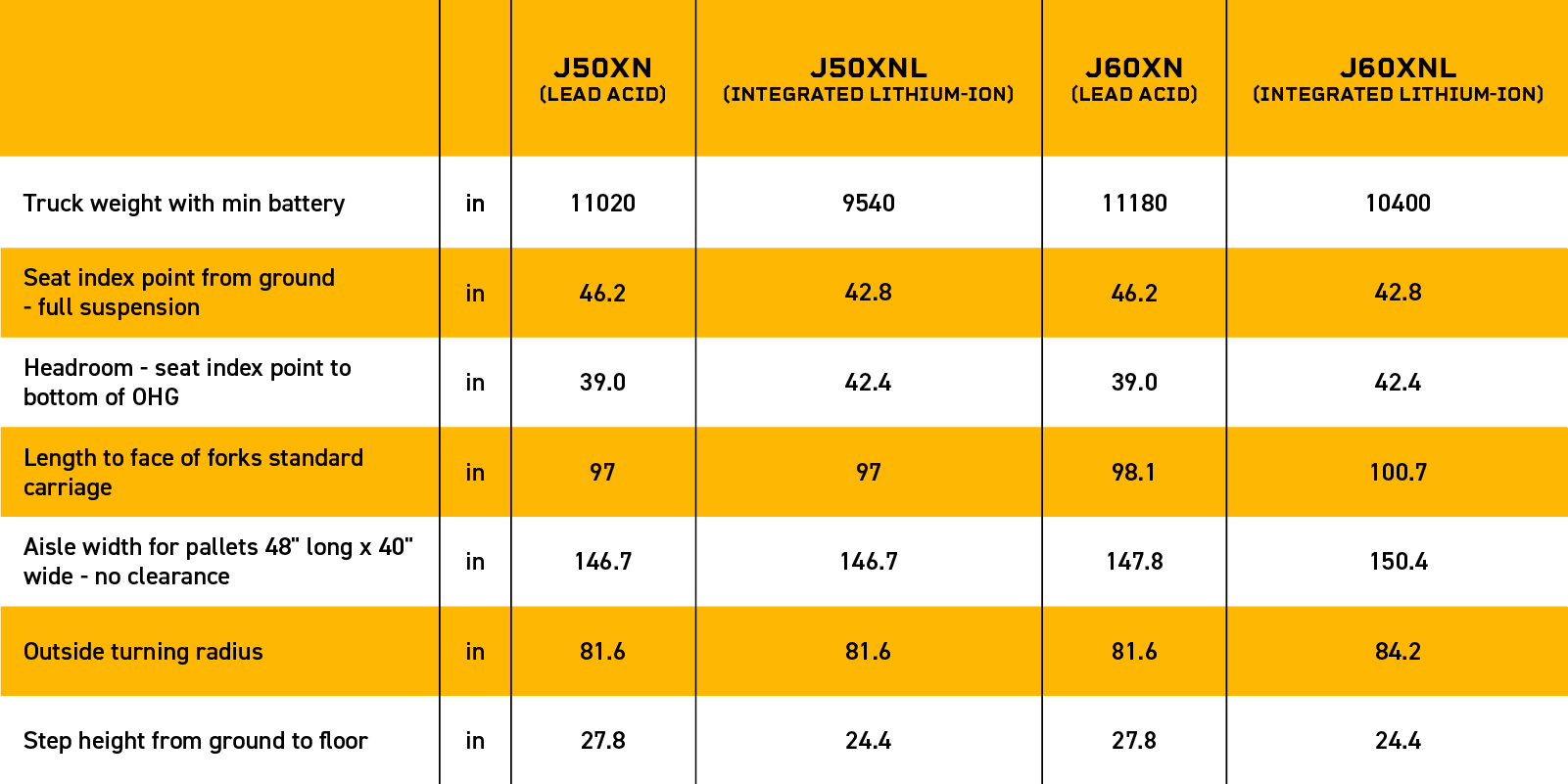
The better path is a factory-integrated truck. Hyster’s J-series and Yale’s ERP and ERC lithium models are designed around the smaller battery from the start. That frees up operator compartment space, drops truck weight for quicker acceleration, and moves the center of gravity for better handling. Yale’s integrated lineup runs from 3,000 to 19,000 pounds of capacity.
The second path is a conversion on a compatible truck. Yale offers a feature called Power Key that lets a qualifying truck switch among lead-acid, TPPL, and lithium-ion batteries without any external accessories. The operator changes power source right on the truck display.
One hard rule either way. A lead-acid charger cannot charge a lithium-ion battery, and a lithium charger cannot charge a lead-acid battery. The chargers talk to the battery over the manufacturer’s own protocol, so the battery and charger get selected together.
Where does lead-acid still win?
In single-shift and light two-shift operations where the truck genuinely sits overnight.
|
Factor |
Lead-acid |
Lithium-ion |
|
Best fit |
Single shift, light two-shift |
Two to three shifts, heavy duty cycle |
|
Cost up front |
Lowest |
Higher |
|
Charging |
About 16 hours plus cool-down |
Opportunity charge on breaks |
|
Battery swaps |
Required for multi-shift |
None |
|
Battery maintenance |
Watering, equalizing, cleaning |
None on the pack |
|
Battery room |
Required |
Not required |
|
Track record |
Over 50 years in the field |
Warrantied to 5 years or 10,000 hours |
Lead-acid is still the lowest-cost way to electrify a fleet, and it has a fifty year track record. The only question that matters is which one fits your hours.
Why buy the battery from Berry Material Handling?
Because you get one system, one warranty, and one phone call when something acts up.
Hyster and Yale validate the truck, the battery, and the charger together as a single package. The battery talks directly to the truck, and telemetry through Hyster Tracker or Yale Vision shows state of charge, temperature events, faults, and energy consumption for the whole fleet. Hyster says a single-source setup removes the software mismatches and charging errors that show up when a third-party battery gets paired with somebody else’s charger.
When a mixed system misbehaves, the battery vendor points at the charger vendor and the charger vendor points at the truck. That is time you do not have.
What is the right next step?
Look at your actual run hours before you spend a dollar.
The decision comes down to five things: how many hours per shift your trucks really run, how many shifts you run, where you can put chargers, what your building’s electrical service can carry, and how hot or cold the work is. Get those five answers and the right power source is usually obvious.
That is the walk-through our team does at no charge. Reach out to Berry Material Handling in Wichita, Topeka, Salina, or Garden City, and we will look at your operation and tell you straight whether lithium-ion pays off for you… and if lead-acid is still the smarter buy, we will tell you that too.